

Observation / 3 min read
Why Cats Inspect the Same Corner Twice
Example article · Republic editorial desk
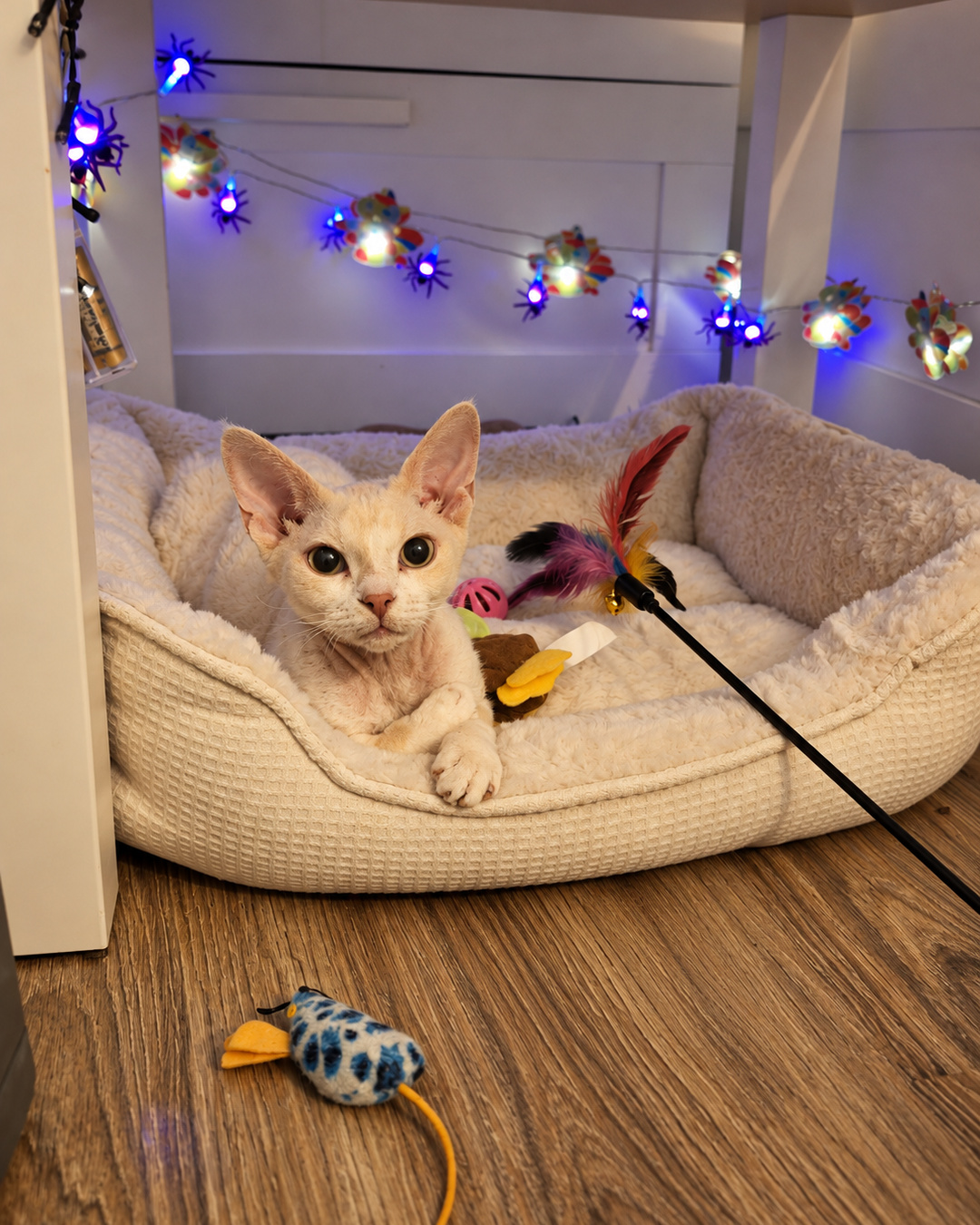
To you, it is an empty corner. To your cat, it is today’s most compelling data hub. A bag shifted an inch to the left, an interior door cracked open, or a brand-new scent hitched a ride on the sole of your sneaker. The room looks identical to human eyes, but in the feline world, "familiar" never means "unchanged."
Cats explore using a multi-sensory toolkit that far outpaces our vision-driven perception. When a cat pauses in front of a blank wall, sniffs slowly, and returns ten minutes later to run the check again, they aren’t experiencing short-term memory lapses. They’re analyzing an ever-shifting environmental dashboard.
The takeaway isn’t that every corner hides a mystery. It’s that real curiosity starts by paying rigorous attention to the ordinary. Your Citizen has already started fieldwork; maybe it’s time we noticed.
Anatomy of an Empty Corner: 3 Evidence-Based Facts
The Vomeronasal (Jacobson’s) Organ & Flehmen Response: When a cat pauses intently near a corner with a slightly parted mouth, they’re activating the vomeronasal organ in the roof of the mouth. This lets them "taste" non-volatile pheromones carried by subtle air currents. They aren't staring at the wall—they're decoding who or what just passed by. (Source: D.S. Mills et al., Encyclopedia of Feline Behavior and Welfare, 2010)
Vibrational Sensing via Pacinian Corpuscles: Cats carry an ultra-high density of Pacinian corpuscles—mechanoreceptors sensitive to micro-vibrations in the 80–800 Hz range—in their paw pads and facial whiskers. Routine corner checks are often triggered by subsurface mechanical hums from plumbing or appliances. (Source: Journal of Comparative Neurology, Somatosensory Research in Felids)
The "Thermal Plume" Effect in Room Corners: Architectural corners act as natural convection funnels. Air currents moving along walls naturally concentrate airborne organic particles and scent molecules right in the corners, turning them into natural olfactory hot-spots. (Source: REHVA / European HVAC Engineering & Indoor Aerodynamics Standards)