

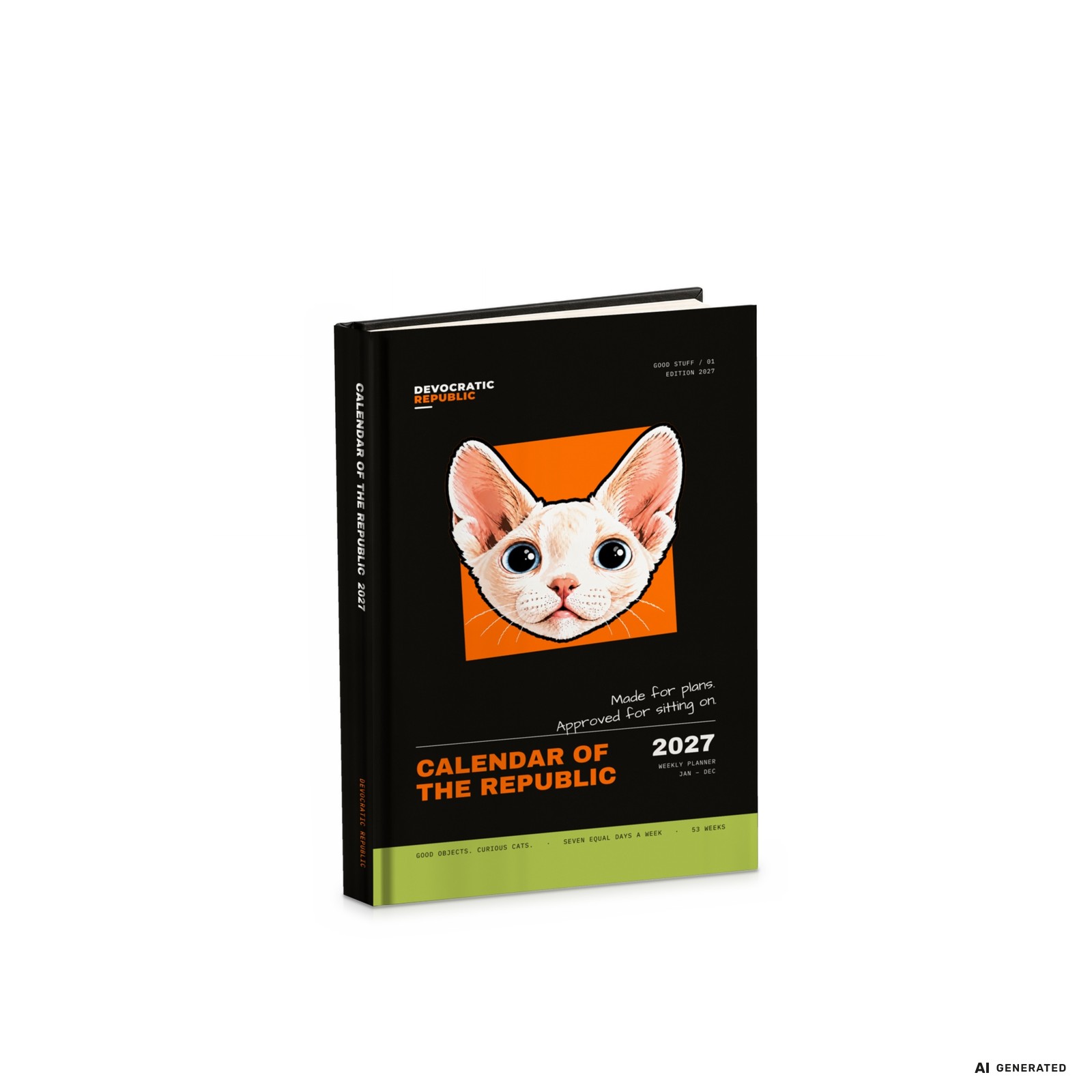
New
DEVOCRATIC REPUBLIC / Stationery
Calendar 2027 — Black Edition — Hardcover
$34.99
Available on Amazon · English interior
View productBuy on Amazon
Opens on Amazon.com

A relaxed, curious republic for cats, their people, and everyone who likes to look a little closer.
Filed under / highly curious
Cats / People / StoriesBrowse & vote on storiesGive a paw to the ones you like.
Good Stuff collection
DEVOCRATIC REPUBLIC / Stationery
$34.99
Available on Amazon · English interior
View productOpens on Amazon.com
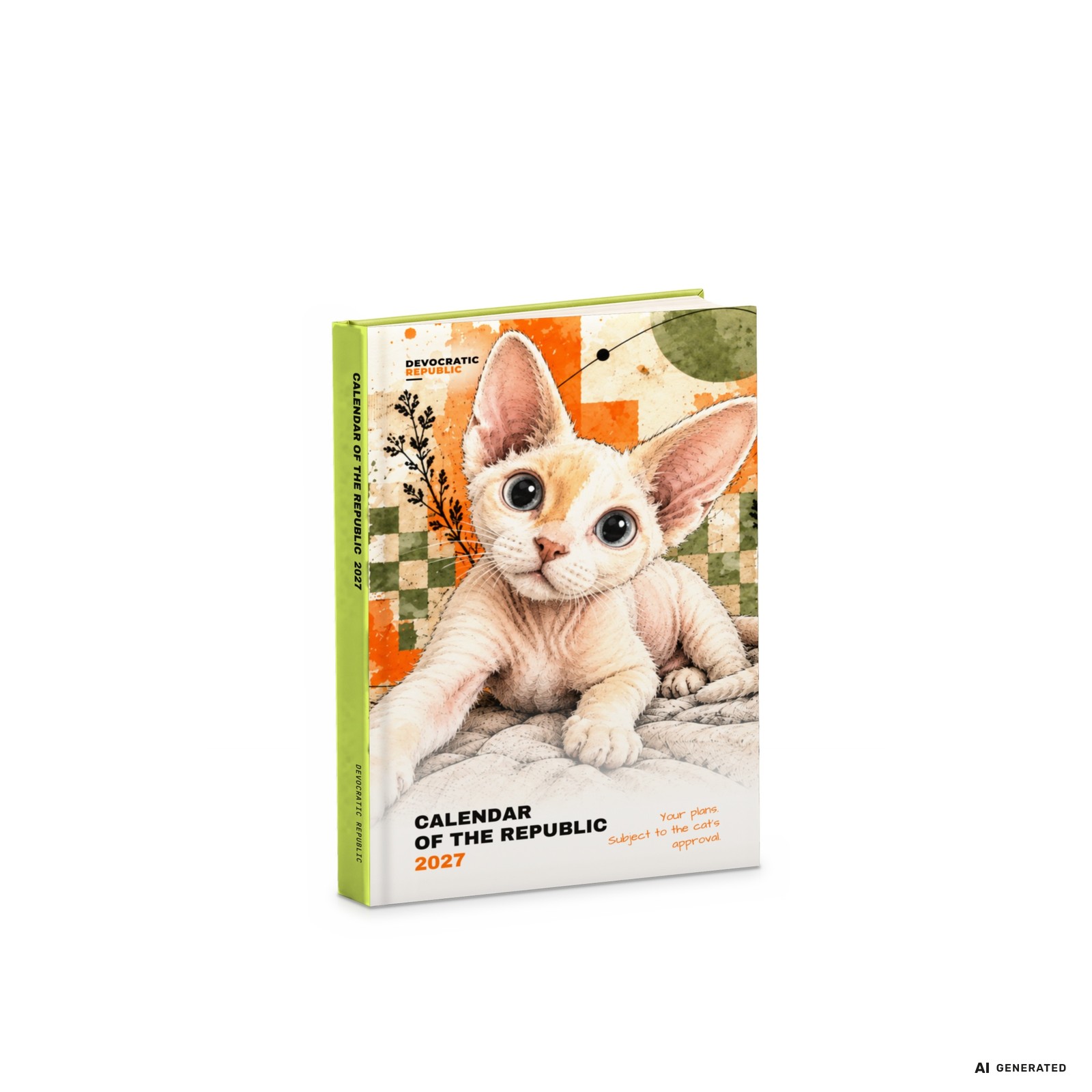
DEVOCRATIC REPUBLIC / Stationery
$34.99
Available on Amazon · English interior
View productOpens on Amazon.com
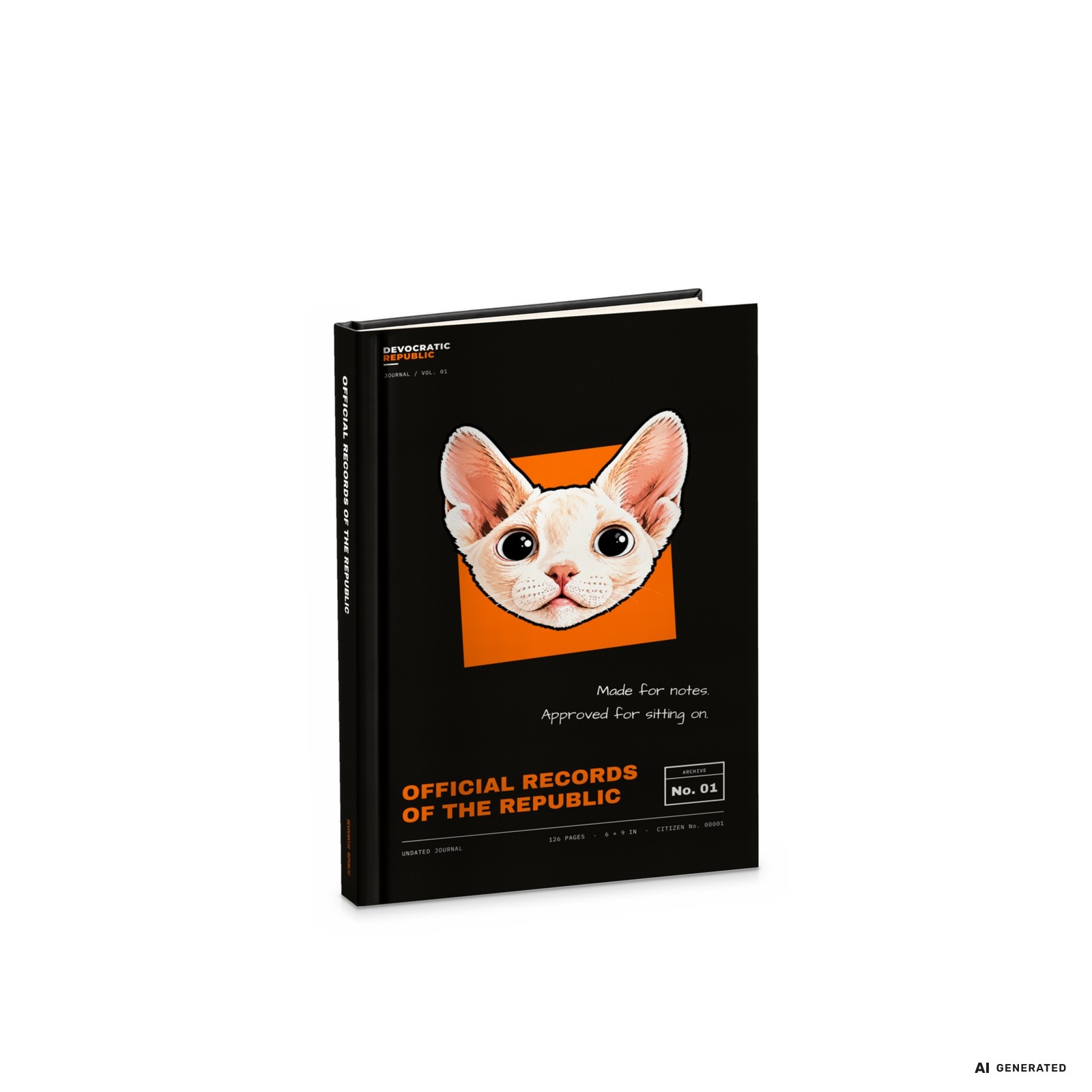
DEVOCRATIC REPUBLIC / Stationery
$19.99
Available on Amazon · English interior
View productOpens on Amazon.com
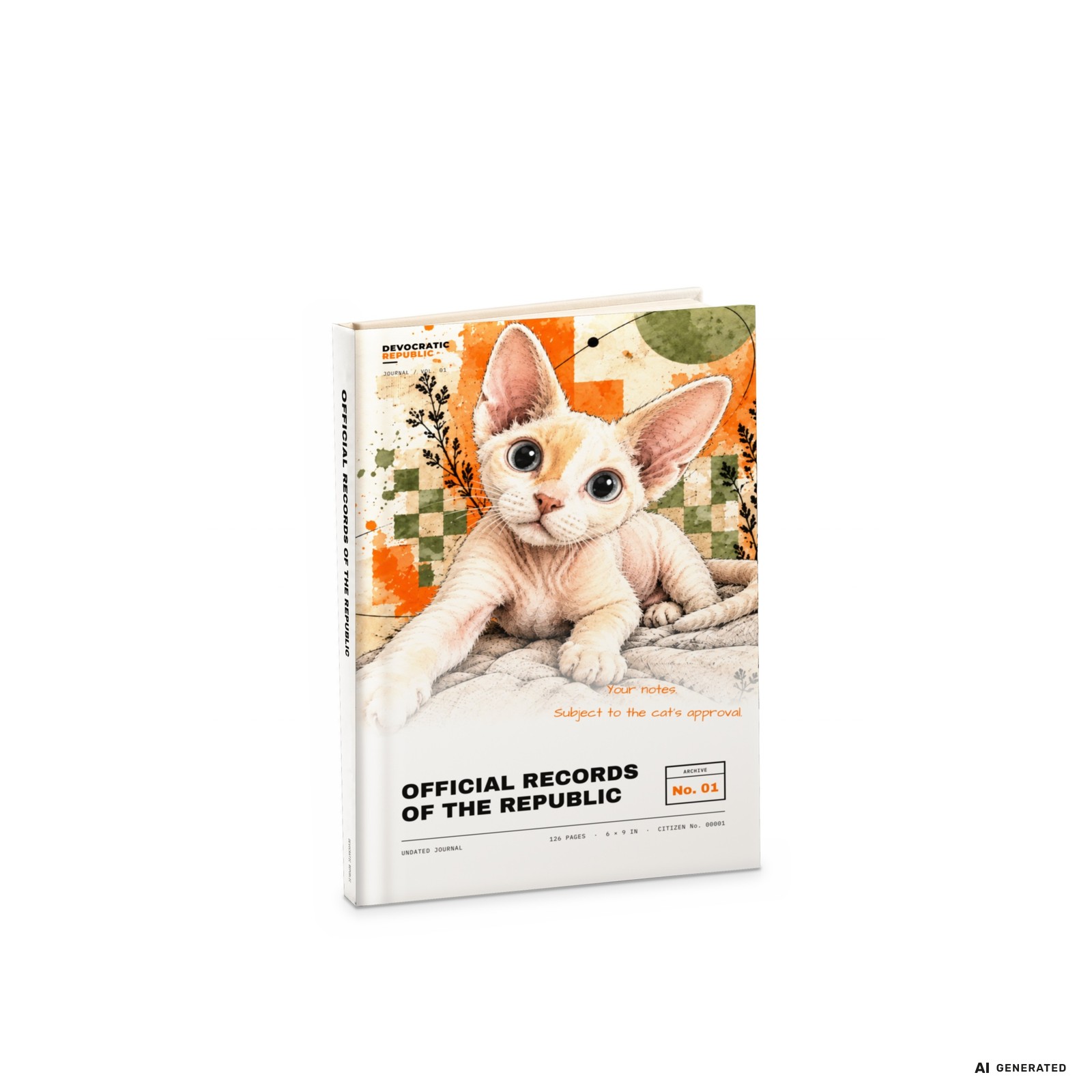
DEVOCRATIC REPUBLIC / Stationery
$19.99
Available on Amazon · English interior
View productOpens on Amazon.com
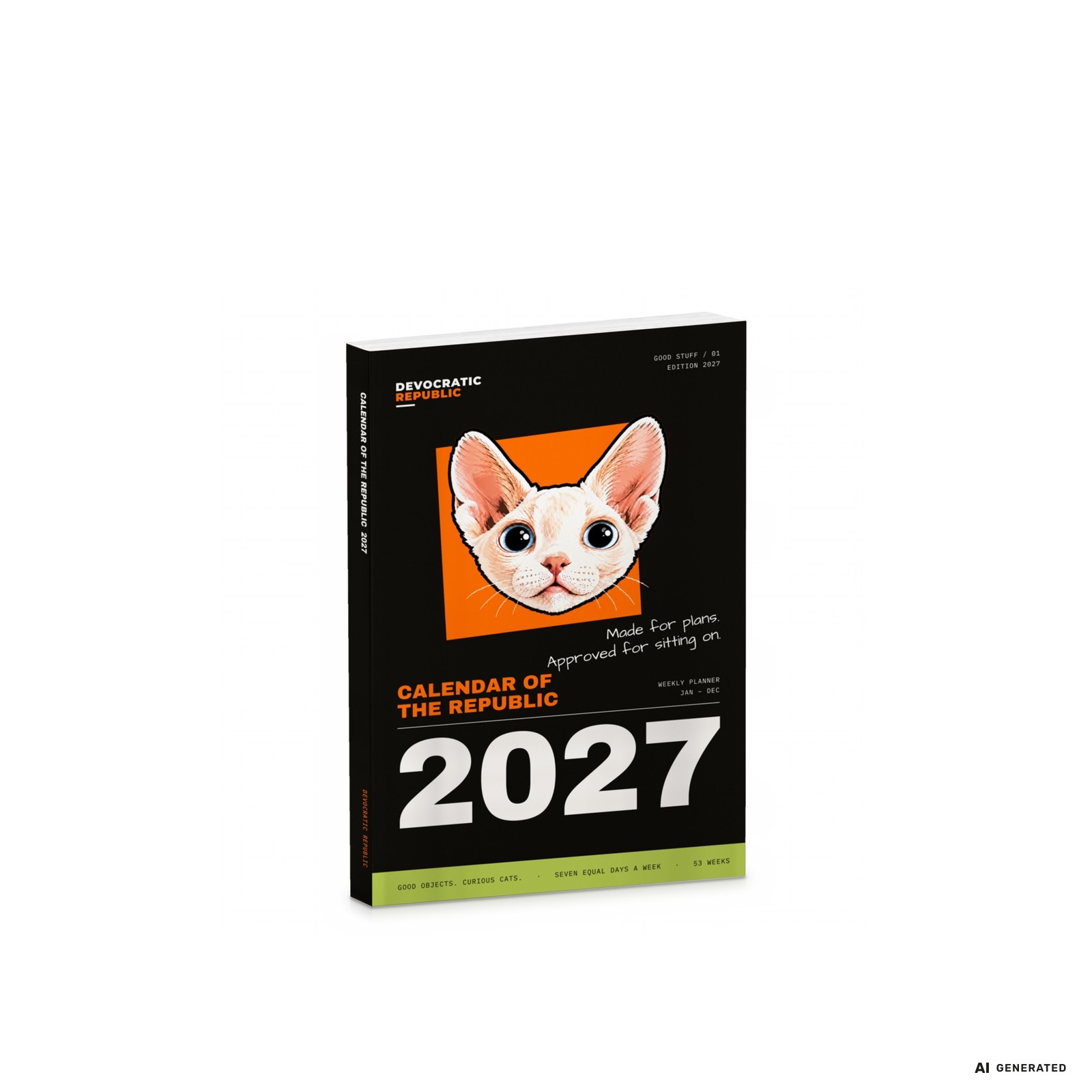
DEVOCRATIC REPUBLIC / Stationery
$16.99
Available on Amazon · English interior
View productOpens on Amazon.com
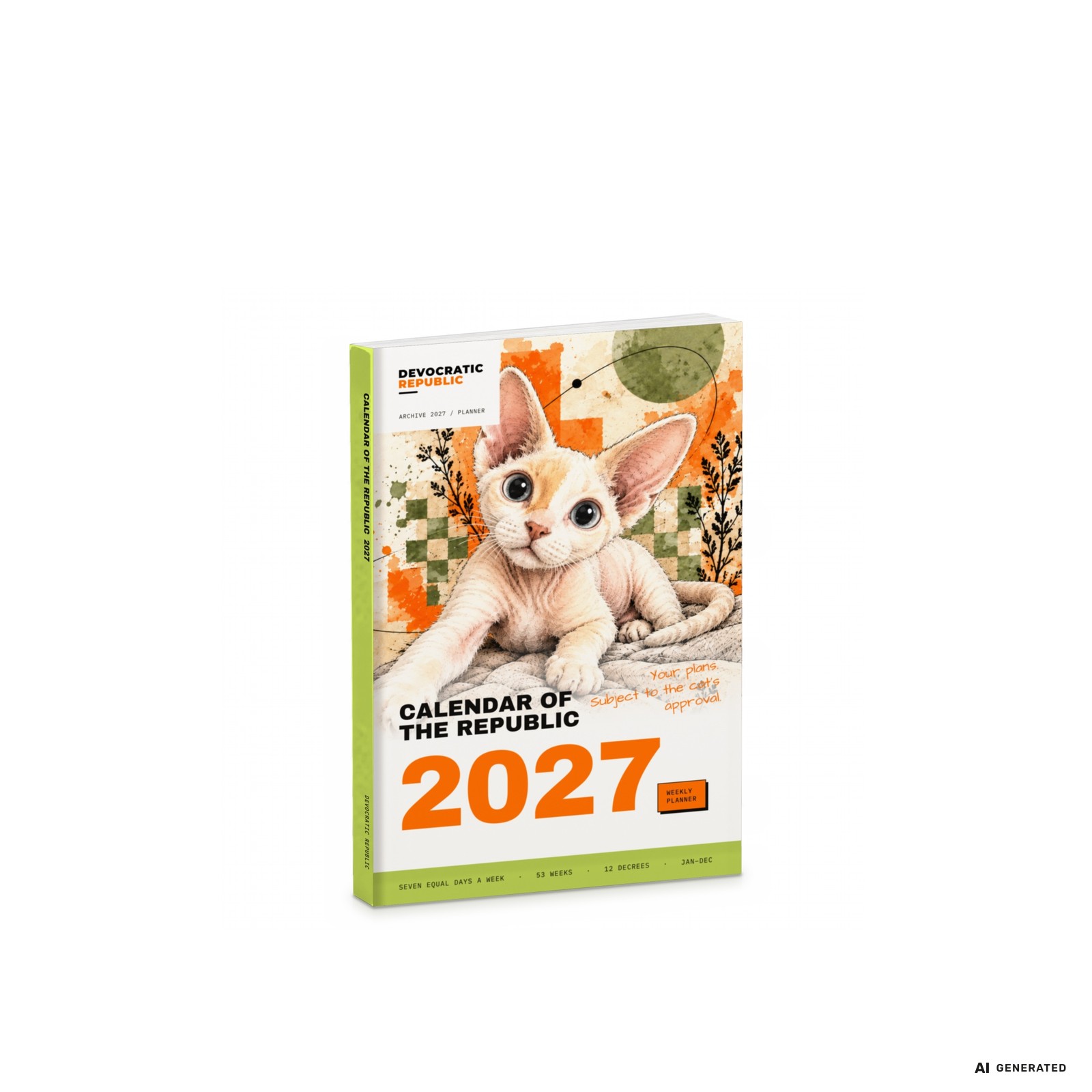
DEVOCRATIC REPUBLIC / Stationery
$16.99
Available on Amazon · English interior
View productOpens on Amazon.com

DEVOCRATIC REPUBLIC / Stationery
$9.99
Available on Amazon · 108 clean drawing pages
View productOpens on Amazon.com
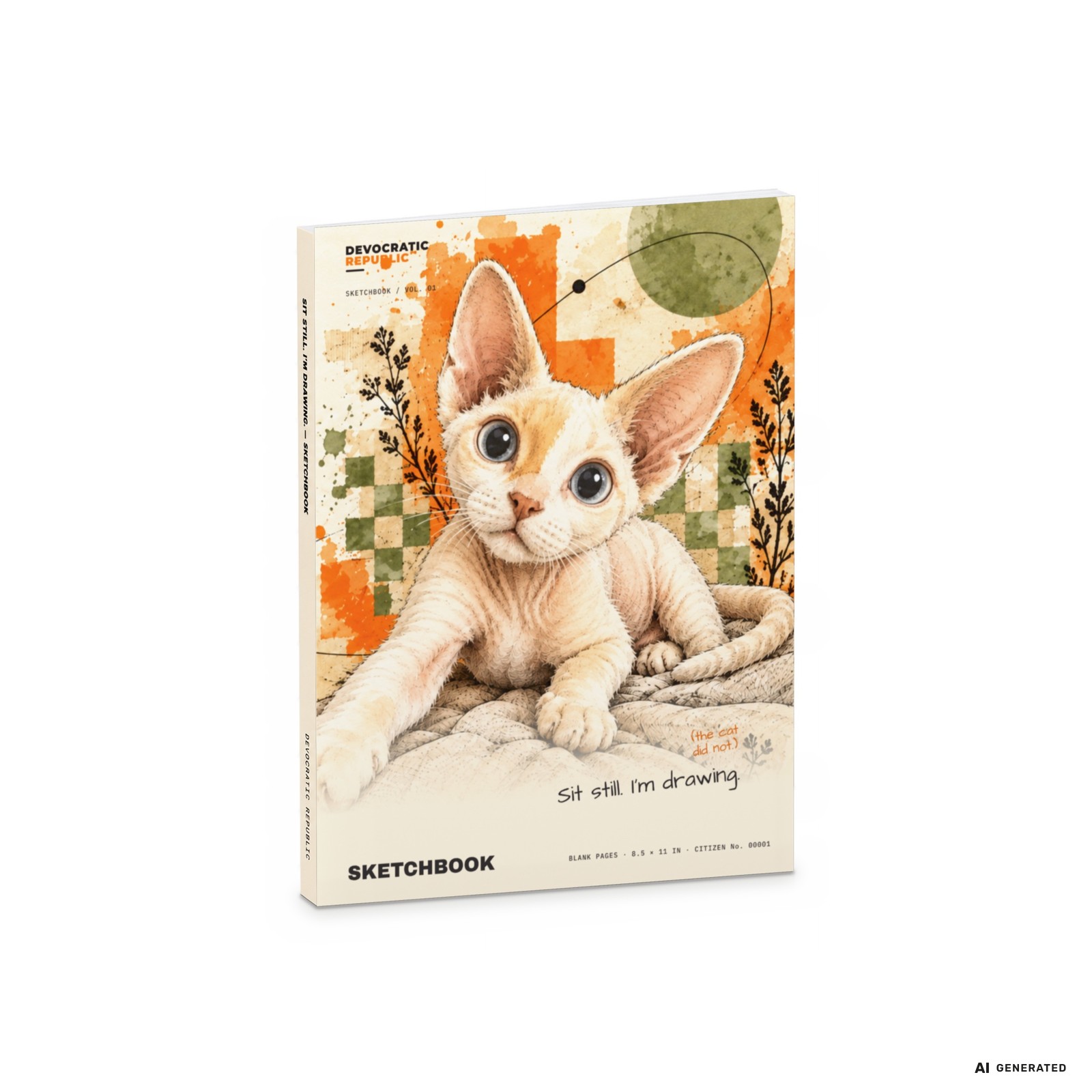
DEVOCRATIC REPUBLIC / Stationery
$9.99
Available on Amazon · 108 clean drawing pages
View productOpens on Amazon.com

DEVOCRATIC REPUBLIC / Objects & gifts
Price coming soon
Preorder · orders opening soon.
View productThe purchase link will appear when the offer is available.
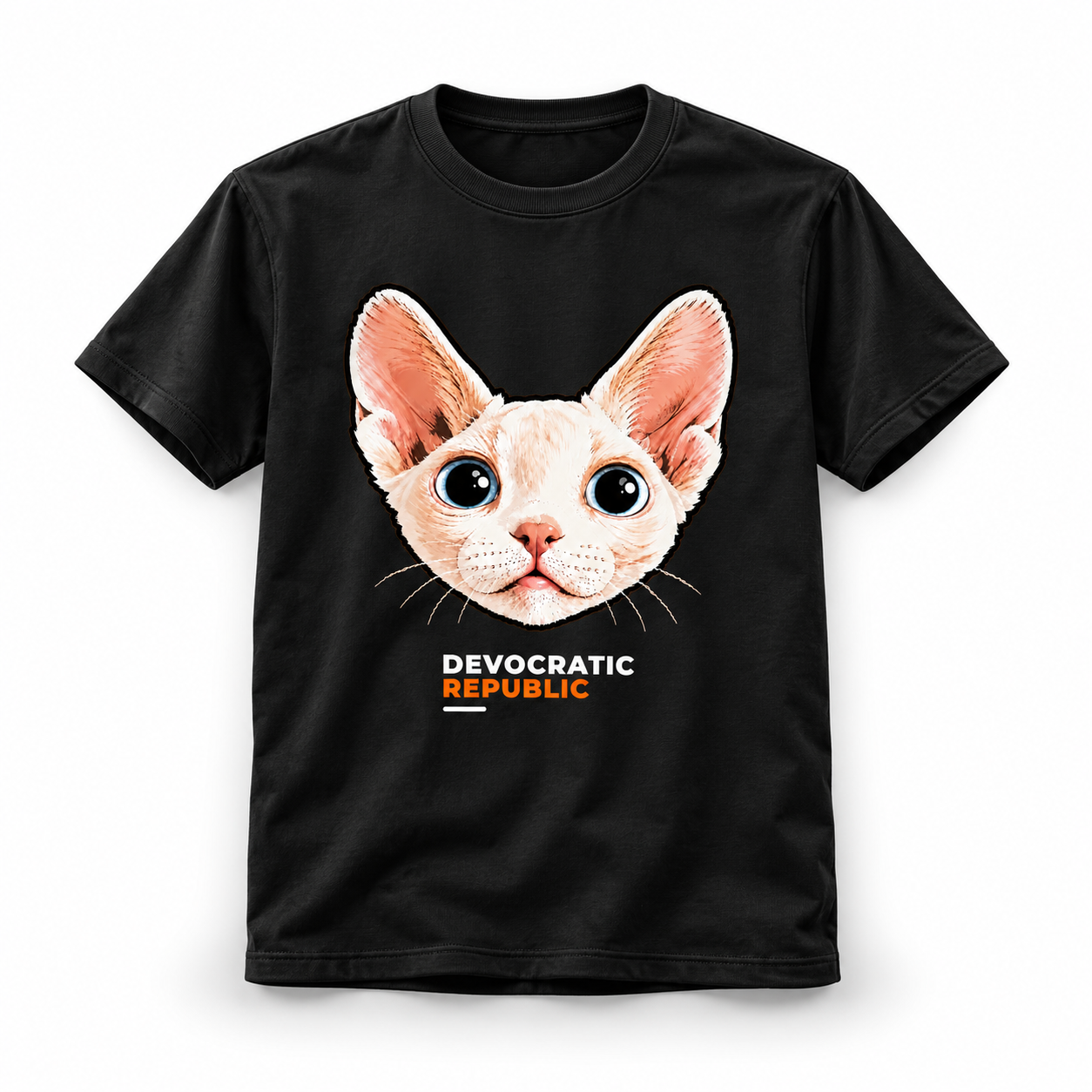
DEVOCRATIC REPUBLIC / Objects & gifts
Price coming soon
Preorder · orders opening soon.
View productThe purchase link will appear when the offer is available.
A vote for the Republic. Music with feline character. And a little room to play.
Play in the RepublicNotes on cats, behaviour, culture and the strange details that make living together interesting.
Living Together / 3 min read
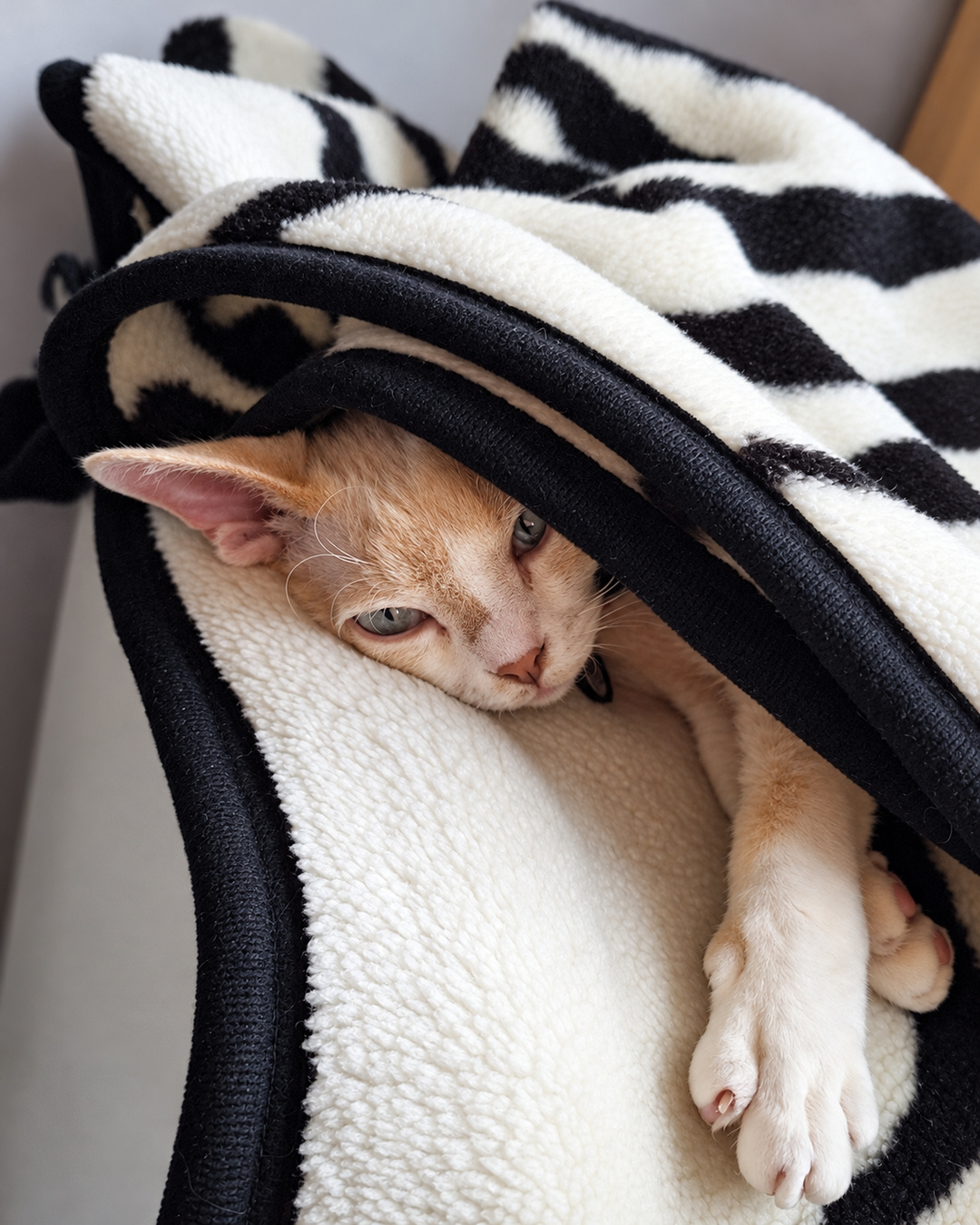
Sharing a home with a cat means private property is mostly an illusion. The best seat in the house is rarely yours for long. It might be the patch of cushions catching the afternoon sun, or the desk chair you just vacated after hitting send on one last email. Stand up for coffee, and a new occupant appears. No meeting, no paperwork—just a very quiet, absolute transfer of power. Most humans write this off as a playful nuisance or a tiny power grab. But through the lens of feline ethology and evolutionary biology, claiming a warm seat is a precise bio-energetic and social strategy. Your cat isn’t occupying your chair to prove a point; they are stepping straight into a perfectly calibrated microclimate saturated with the most vital olfactory cues in your shared ecosystem. The Republic’s stance is straightforward: shared space works best when every Citizen has a comfortable place to retreat. Rather than turning every empty chair into a daily diplomatic negotiation, understanding the biological driver behind the choice lets you design a peaceful coexistence—starting with a warm blanket placed thoughtfully nearby. The Science Behind the Warm Seat: 3 Evidence-Based Facts Thermoneutral Comfort Zone (86–100°F / 30–38°C): While the human thermoneutral zone sits comfortably around 68–72°F, a domestic cat's metabolic thermoneutral zone spans from 86°F to 100°F. In this range, cats expend zero extra metabolic energy to maintain core body heat. The warm seat acts as a vital thermal buffer. (Source: National Research Council, Nutrient Requirements of Dogs and Cats, 2006) Olfactory Blending & "Colony Scent": A freshly abandoned chair is saturated with human skin lipids and scent. When a cat settles in, they rub their cheeks and paws against the fabric, depositing facial pheromones. This blends human and feline signatures into a unified "colony scent" that signals social safety. (Source: Bradshaw, J. W. S., Cat Sense: How the New Feline Science Can Make You a Better Friend to Your Pet, 2012) Cortisol Reduction via Elevated Vantage Points: Desks and office chairs offer elevated vantage points that maximize spatial awareness and a sense of control. Ethological studies show that access to elevated, comfortable resting surfaces directly correlates with lower salivary cortisol levels. (Source: Krysiak et al., Journal of Feline Medicine and Surgery, 2018)
Read article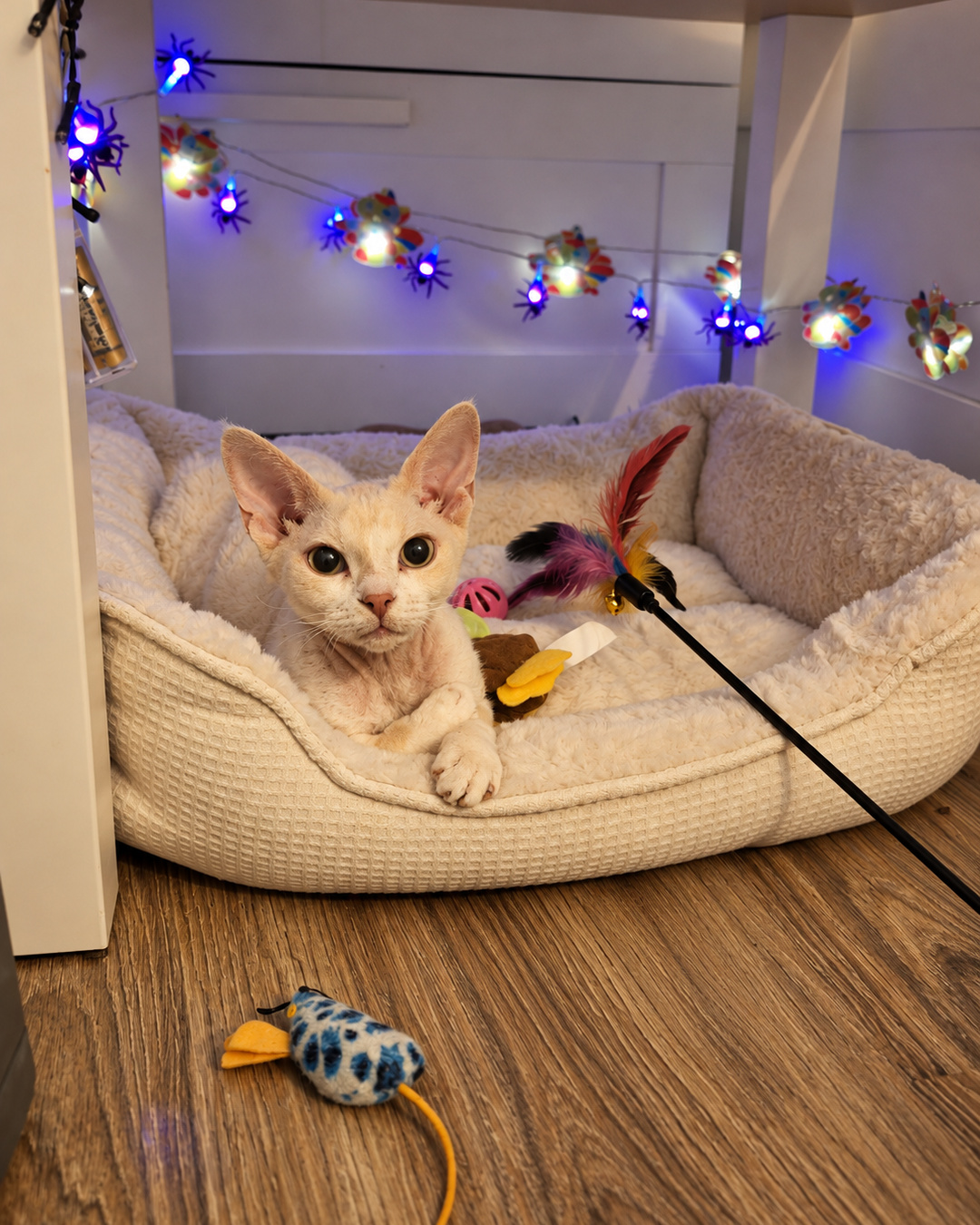
Observation / 3 min read
To you, it is an empty corner. To your cat, it is today’s most compelling data hub. A bag shifted an inch to the left, an interior door cracked open, or a brand-new scent hitched a ride on the sole of your sneaker. The room looks identical to human eyes, but in the feline world, "familiar" never means "unchanged." Cats explore using a multi-sensory toolkit that far outpaces our vision-driven perception. When a cat pauses in front of a blank wall, sniffs slowly, and returns ten minutes later to run the check again, they aren’t experiencing short-term memory lapses. They’re analyzing an ever-shifting environmental dashboard. The takeaway isn’t that every corner hides a mystery. It’s that real curiosity starts by paying rigorous attention to the ordinary. Your Citizen has already started fieldwork; maybe it’s time we noticed. Anatomy of an Empty Corner: 3 Evidence-Based Facts The Vomeronasal (Jacobson’s) Organ & Flehmen Response: When a cat pauses intently near a corner with a slightly parted mouth, they’re activating the vomeronasal organ in the roof of the mouth. This lets them "taste" non-volatile pheromones carried by subtle air currents. They aren't staring at the wall—they're decoding who or what just passed by. (Source: D.S. Mills et al., Encyclopedia of Feline Behavior and Welfare, 2010) Vibrational Sensing via Pacinian Corpuscles: Cats carry an ultra-high density of Pacinian corpuscles—mechanoreceptors sensitive to micro-vibrations in the 80–800 Hz range—in their paw pads and facial whiskers. Routine corner checks are often triggered by subsurface mechanical hums from plumbing or appliances. (Source: Journal of Comparative Neurology, Somatosensory Research in Felids) The "Thermal Plume" Effect in Room Corners: Architectural corners act as natural convection funnels. Air currents moving along walls naturally concentrate airborne organic particles and scent molecules right in the corners, turning them into natural olfactory hot-spots. (Source: REHVA / European HVAC Engineering & Indoor Aerodynamics Standards)
Read article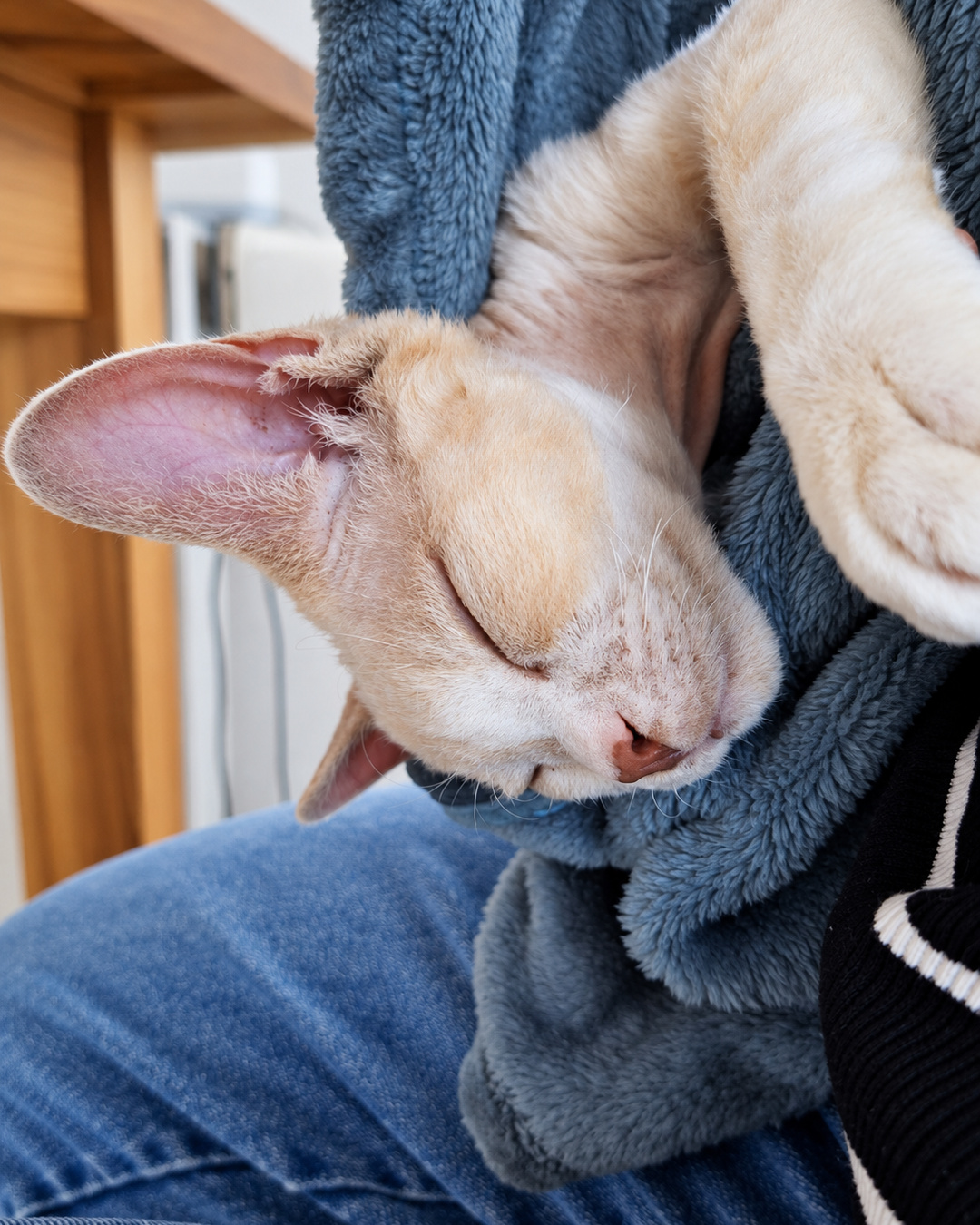
Behaviour / 3 min read
The ears swivel first. Then the head snaps around. You hear absolute silence, but your cat is already locked in, staring down an empty hallway. A minute later, the delivery driver’s footsteps echo on the stairs. Sharing a home doesn’t mean experiencing the exact same physical reality. Cats pick up environmental signals way outside human perceptual limits. They don’t have supernatural powers—their senses are simply precision instruments tuned for survival in a high-frequency world. A quiet living room actually has a pulsing soundtrack: hydraulic pressure shifts in heating pipes, high-frequency electromagnetic hums from modern appliances, and micro-refractions of light. Before writing off a cat's reaction as random, remember your Citizen just picked up a signal you couldn’t touch. Super-Senses in Action: 3 Scientific Realities Ultrasonic Hearing Range up to 64 kHz: While human hearing caps out around 20 kHz, cats detect ultrasonic frequencies up to 64 kHz. Evolution wired this in so felines could track the high-pitched communication of small rodents (30–50 kHz). A cat reacting to a "ghost" is often tracking the ultrasonic whine of electronics or wall wiring. (Source: Fay, R. R., Hearing in Vertebrates: a Psychophysics Data Book, 1988) 32 Independent Ear Muscles per Pinna: Cats can rotate each ear independently up to 180 degrees using 32 separate muscles (compared to a human's 6). This delivers pinpoint sound localization with an error margin of just 5 degrees. (Source: Heffner, R. S., & Heffner, H. E., Sound localization in the cat, Hearing Research, 1985) Tapetum Lucidum & Rod-Dominant Retina: A cat's retina features a 25:1 rod-to-cone ratio optimized for motion detection in dim light. The reflective tapetum lucidum layer behind the retina bounces light back through the photoreceptors, boosting low-light sensitivity more than 6-fold. (Source: Ollivier, F. J. et al., Comparative morphology of the tapetum lucidum, Veterinary Ophthalmology, 2004)
Read article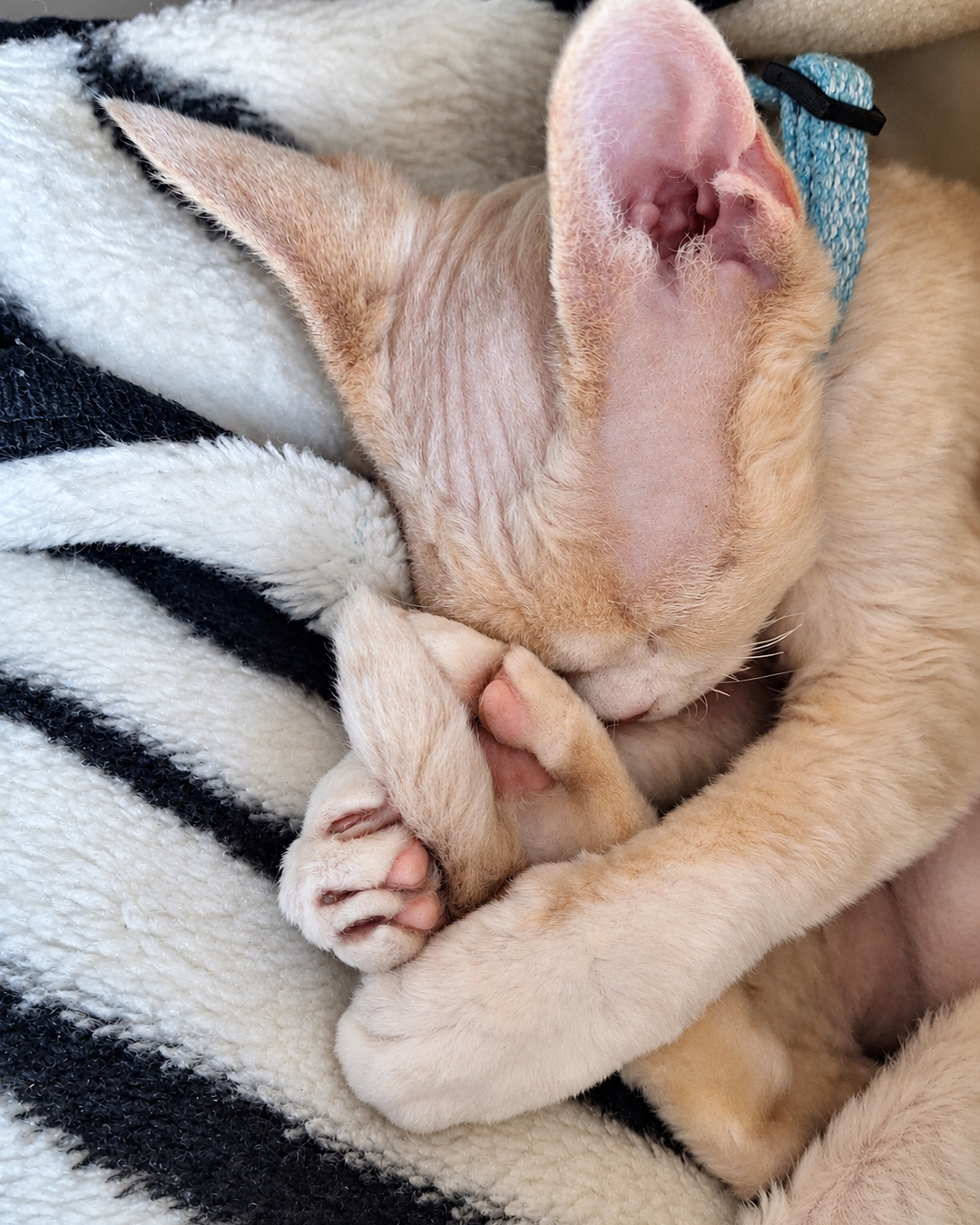
Field Notes / 3 min read
A cat curled into a tight knot in a patch of afternoon sun has zero interest in your to-do list. There are no milestones to log, no metrics to hit. Just a body that found an ideal posture and decided to stay put indefinitely. Rest is a cornerstone of feline existence. Some naps are light—an ear twitching lazily at a passing sound; others are deep, heavy, and wonderfully committed. Cats spend between 12 and 16 hours a day asleep, a trait humans constantly mislabel as sheer laziness. In reality, extended rest is an elite evolutionary strategy. We don't need to turn every quiet moment into a lecture on human productivity. Sometimes the most useful thing you can do is simply let an animal rest in peace. The Physiology of Feline Rest: 3 Scientific Facts REM Sleep Accounts for Only 25–30% of Total Rest: Out of 12–16 daily sleep hours, the vast majority is Slow-Wave Sleep (SWS)—a light, alert rest state where muscle tone and sensory tracking stay active. True REM sleep (with twitching and dreaming) occurs only in brief 6-to-7-minute bursts. (Source: Jouvet, M., Neurophysiology of the states of sleep, Physiological Reviews, 1967) Obligate Carnivore Metabolism & Energy Conservation: Converting animal proteins and fats into glucose via gluconeogenesis takes massive metabolic effort. Feline biology is built for short, explosive bursts of hunting energy punctuated by long hours of strict caloric conservation. (Source: National Research Council, Nutrient Requirements of Dogs and Cats, 2006) Growth Hormone Release & Tissue Repair: Deep sleep cycles trigger peak releases of somatotropin (growth hormone), which drives cellular repair, protein synthesis, and immune upkeep. Without extended daily naps, an athletic predator's body would rapidly break down. (Source: American Journal of Physiology, Feline Sleep-Wake Endocrine Studies)
Read article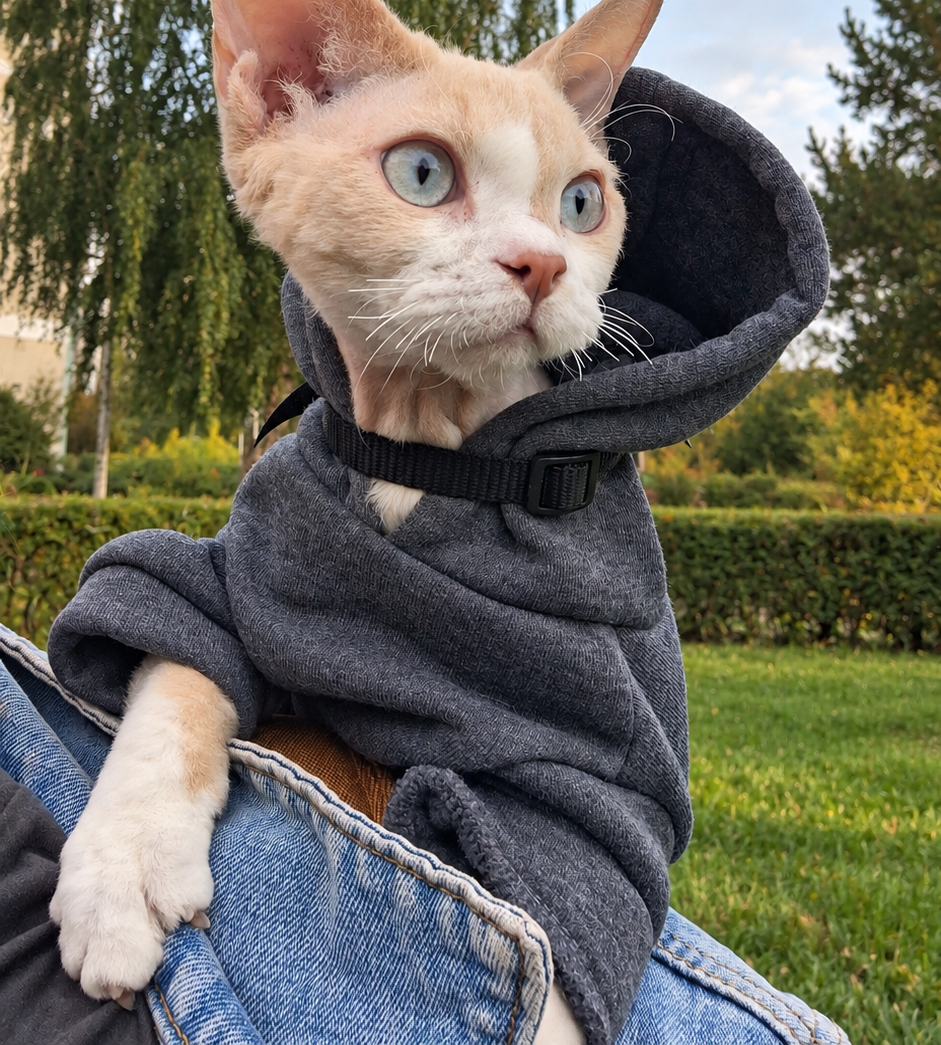
Small cats. Big research.
Clothes, toys and equipment — reviewed by the people who use them.
Explore Cat Gear reviews
Chief observer. Heat-seeking citizen. Unreliable editor. A very reliable reason to look closer.
About Tajfun & the RepublicPeople. Cats. Plenty to share.
Curious cats. Good people. A sense of humour. We’re building a Republic where small adventures become stories and what you know helps someone else.
Make it official. Keep it playful.
Excellent character. Now in print.
A second name? Secret skills? Empty-bowl inspector or armchair champion? Discover the talents you never noticed until you wrote them down. Make a passport for yourself or your pet — and put that personality on paper.
The box they claimed. The habit you can’t explain. Share a few words, photos or a link to your cat’s story. That’s how the Republic comes to life.
A toy they loved? A bed they ignored? Share an honest Cat Gear review. Your discoveries can save another human some guesswork.
Join us. There’s a whole personality behind that innocent face.
We’ll email you a link to confirm your citizenship. Occasional Republic updates are planned — at most 1–2 a month.
Every citizen can vote for a story with a paw: one vote per calendar month, for one story. Anyone can vote for products, even without citizenship.